
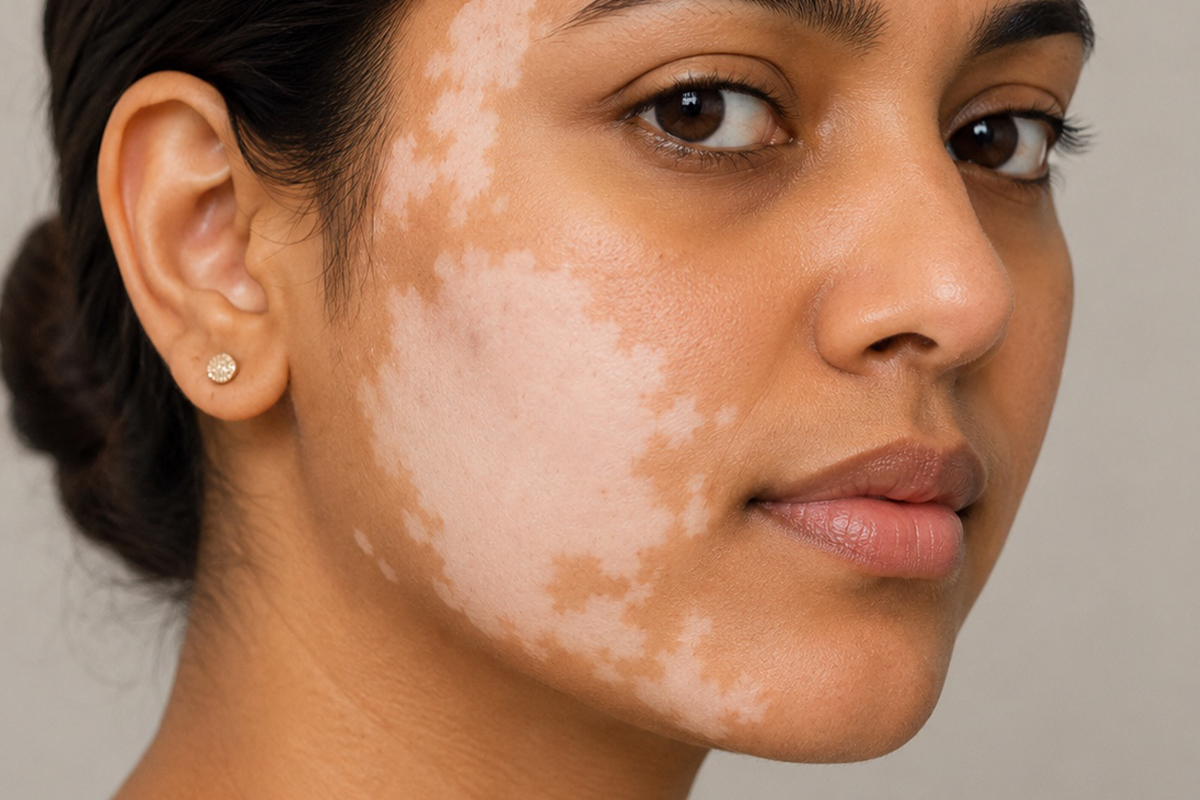
Medical Overview: Specialized treatment requiring long-term dermatological supervision and patient education.
Vitiligo treatment must be prescribed and monitored by a qualified dermatologist. Patient education and realistic expectations are crucial.


Vitiligo affects everyone differently. Our approach focuses on supporting repigmentation and skin tone balance with care that’s tailored to your condition and its progression.
Vitiligo is a skin condition that causes patches of skin to lose their pigment, resulting in lighter or white patches. It occurs when pigment-producing cells (melanocytes) stop functioning or die.
While there's no permanent cure, several approaches can help manage vitiligo and support repigmentation, depending on the extent and type of the condition. A dermatologist can guide you on what's suitable for your case.
Yes — vitiligo varies widely between individuals, so a proper skin assessment helps determine the right approach for you.
Approaches are generally tailored based on skin type, affected area, and how the condition has progressed. Your dermatologist can recommend what's appropriate for you.
Your dermatologist will examine the affected areas, discuss your history, and help you understand your options going forward.
Copyright © 2026 Mohrish. All Rights Reserved.
Designed by Spettro Vision